
Heating and Cooling in Salida, CA
Same-Day Visits
Morning calls get a same-day slot.
Salida Route
Run from our Modesto base.
Plain Findings
The problem explained first.
The 1990s Salida house is now a repair decision
Half of Salida was built in a single decade, and that decade is now old enough to matter. The subdivision house off Broadway Avenue that went up in 1994 still has the furnace it was born with in many cases, and the air conditioner beside it has been recharged more than once. The second owner inherits both, along with a hallway thermostat that never matched the room it sits in. The complaint is rarely dramatic: one bedroom runs hot, the furnace short-cycles, the summer bill climbs.
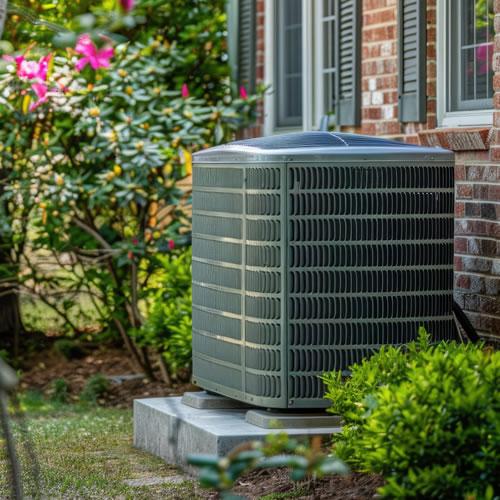
Heating a home in Salida, CA
Salida is small enough that its housing history is legible: one boom, one dominant fuel, one permitting authority. The four blocks below set out what that means for the system in your house.
Salida sits about 70 feet above sea level
At roughly 70 feet above sea level, Salida is close to the floor of the valley and close to sea-level air density. For a gas furnace that is useful information rather than a warning: the burner draws air that is not thin, so the appliance should be running on the standard orifice set it shipped with, with no high-altitude conversion in its history. When a Salida furnace burns badly, altitude is not the explanation. The list to work through is shorter and more ordinary: gas pressure at the manifold, a dirty or corroded burner, a flue that is partly blocked, an inducer that is slowing down, or a heat exchanger that has finally failed. Starting there saves the cost of chasing a cause that does not exist at this elevation.
One decade built half of Salida
The Census puts Salida’s median year built at 1993, and the distribution is unusually concentrated: 50.1% of the housing went up in the 1990s, with 19.9% from the 1980s and 15.3% from the 2000s. That single fact explains most of the service calls in town. A house built in that boom typically has a central gas furnace in a closet or the garage, an air conditioner with a matching age, and ductwork that has never been reworked. Because the houses are the same age, they fail on the same schedule, which is why a Salida street can produce three near-identical calls in one month. The era tells you what to inspect first, and it also tells you what the neighbour’s call will look like next spring.
How Salida heats its homes
Utility gas is the primary heating fuel in 81.1% of occupied Salida homes, according to the American Community Survey. Electricity accounts for 16.4%, wood for 1.2% and bottled or tank gas for 0.9%. Three caveats travel with those figures. Each home’s primary fuel is counted once, so a gas furnace with a ductless heat pump added later still counts as gas. The estimate lags by roughly two years and describes the housing stock rather than this season’s installations. And electricity is not the same thing as a heat pump: the electric share includes resistance furnaces and wall heaters too. What the split does say is that Salida is a gas town, and the furnace is the system that matters most in winter.
Who serves a Salida address
Salida is in Stanislaus County, and it is a census-designated place rather than an incorporated city, so there is no Salida city hall issuing building permits: a changeout in Salida is permitted through Stanislaus County. On utilities, no single answer covers every address in the community, and rebate eligibility depends on which utility serves the address. Before you plan around a heat pump or furnace rebate, check the provider named on your bill and look up its current territory and program rules, or call and ask directly. That check is worth more than any general claim about what Salida qualifies for, because the answer can change from one side of the community to the other, and a program that covers one street may not cover the next.
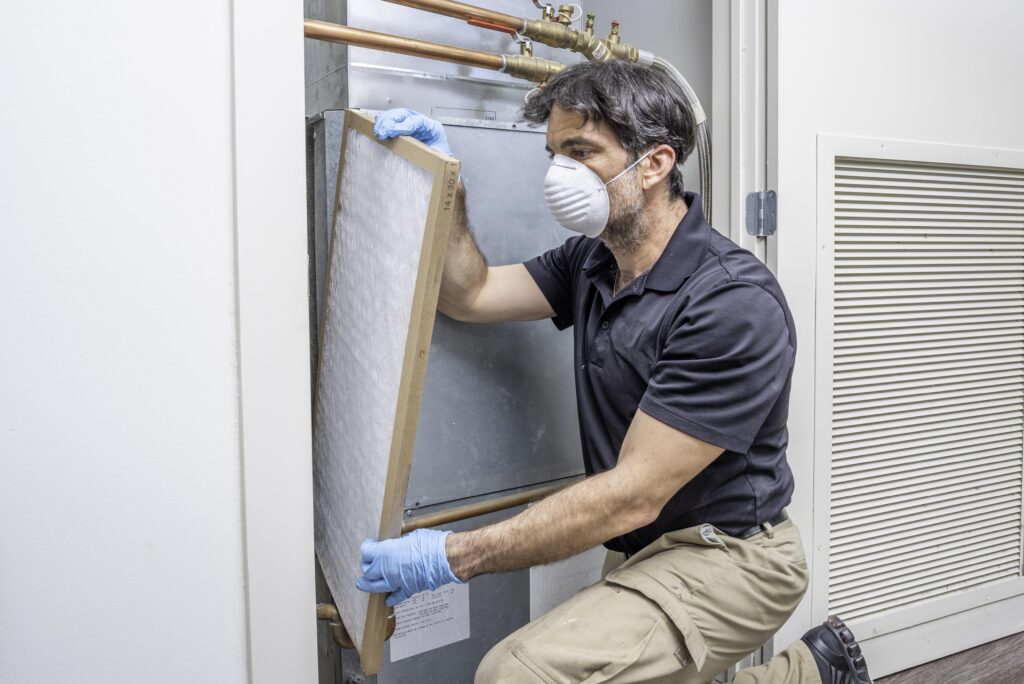
HVAC services in Salida, CA
Because so much of Salida was built in the same decade, the work here has a rhythm: a wave of furnace repairs as the original units age out, then a wave of replacements as the second owner decides the repair no longer holds. The two waves are not evenly spread through the year. Most of the replacement work lands in the weeks after the first cold snap, when a repair that was going to hold until spring suddenly does not.
On the repair side, the common calls are a furnace that lights and drops out, a blower that runs but moves little air, and an air conditioner that cools the front of the house but not the back bedrooms. We handle furnace repair and AC service, and we check the ductwork as part of the visit, because a 1990s subdivision duct system is frequently the real reason one room never catches up.
On the replacement side, a 1990s furnace and condenser usually reach the decision point together. We do furnace installation and AC installation, and the first step is a load check rather than a like-for-like swap, since the original equipment was sized for the house as it stood then, not for the windows, insulation or room additions that came after.
Maintenance is the cheaper path and the one most Salida homeowners defer. A seasonal AC maintenance visit before summer and a furnace check before the first cold night catch the failures that are still inexpensive to fix. Water heaters are the other call that repeats in a town this age, usually as a tank that weeps at the base or a pilot that will not hold. We repair and replace them, and the age of the unit settles whether a repair is worth doing. If the complaint is air quality rather than temperature, indoor air quality work starts with filtration and duct sealing.
Heating or cooling problem in Salida?
Why homeowners in Salida choose us
AC Service Modesto runs Salida as a route from our Modesto base, not a special trip, and that shapes how the work is scheduled: a morning call in Salida can usually be seen the same day. The other local reality is the age uniformity. Because half the town went up in the 1990s, we ask for the year the house was built and the model of the equipment before the visit, and we arrive expecting the pattern that decade produced: a closet furnace, a matched condenser outside, and ductwork that has never been balanced. That is not guesswork; it is what the housing stock tells us to check first. You get the finding in plain language, the options in the order that actually fixes the problem, and no work started before you agree to it. If the honest answer is that the equipment has one more season in it, that is what the report will say, and the next visit starts from that record.
What a first visit covers
- The complaint reproduced before anything is adjusted
- Gas pressure and flame signal on a furnace call
- Refrigerant pressures and airflow on a cooling call
- Filter, return and coil condition
- Duct condition where a room will not keep up
What a Salida changeout involves
- A load check rather than a like-for-like swap
- Whether the existing ductwork can carry the airflow
- Line-set length and routing on a heat pump
- Clearance and venting for a closet furnace
- The county permit path for the address
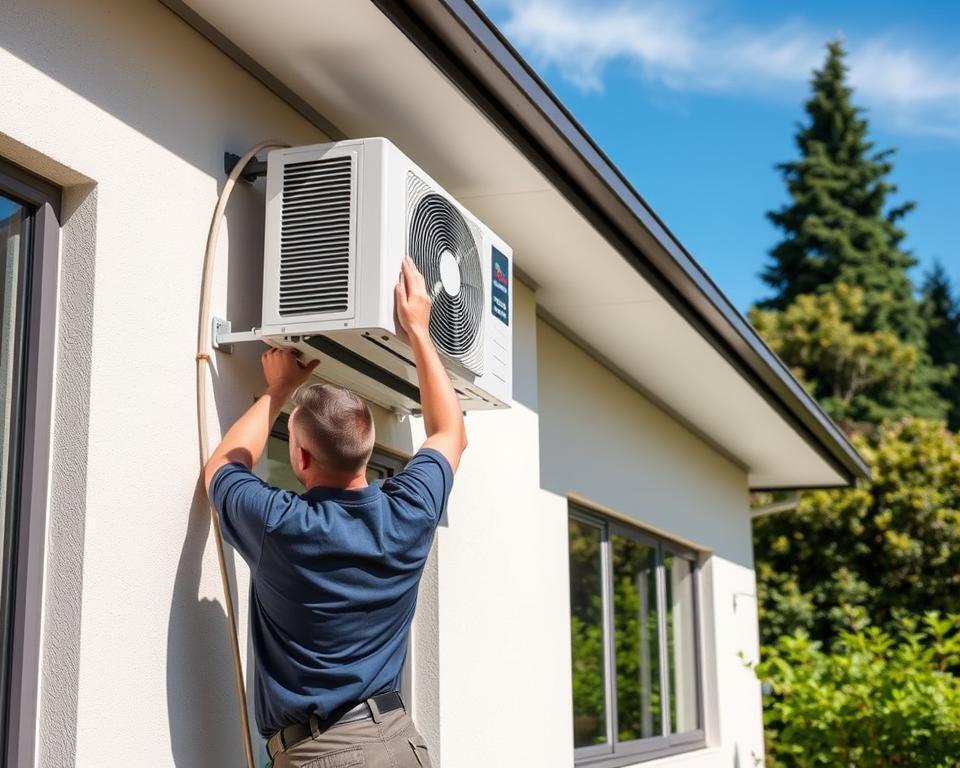
Why this winter matters in Salida
Salida’s timing problem is arithmetic. Half the town’s furnaces were installed within a few years of each other, so they reach the end of their service life within a few years of each other, and the repair-versus-replace decision arrives for a whole neighbourhood at once. That matters in practice because the failure mode is not gradual. A heat exchanger cracks or an inducer seizes, and the house goes cold on the first genuinely cold night, usually with no warning the week before. Waiting one more season on a unit that already needs an annual repair is a bet against the coldest week of the year. Booking the assessment in autumn, before the first cold snap fills the schedule, also leaves time for the parts of a changeout that cannot be rushed: the load check, the duct inspection and the county permit path. It also means the crew is not choosing between three identical emergencies on the same street on the coldest morning of the year.
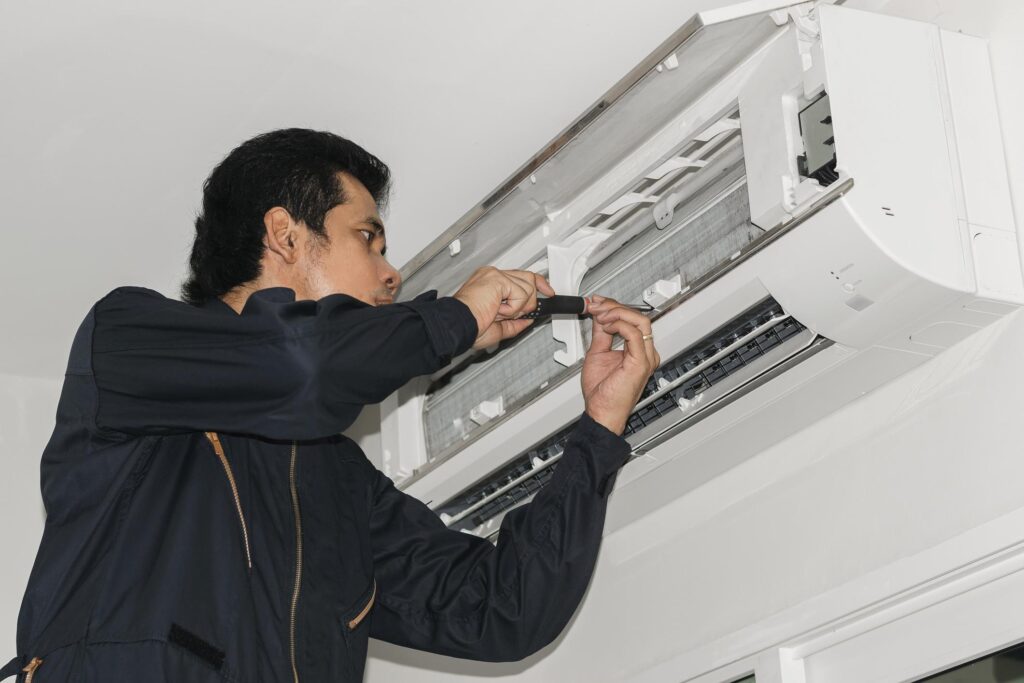
Frequently asked questions in Salida
How old are most houses in Salida?
The median year built in Salida is 1993, and the distribution is concentrated: 50.1% of the housing went up in the 1990s, 19.9% in the 1980s and 15.3% in the 2000s. For a service call that means the original furnace and air conditioner from that boom are the equipment you are most likely to find, and they tend to fail within a few years of one another, which is why the same repair shows up on several houses on one block in the same season.
Do most Salida homes heat with gas?
Yes. Utility gas is the primary heating fuel in 81.1% of occupied Salida homes, against 16.4% electricity, 1.2% wood and 0.9% bottled gas. The Census counts one primary fuel per home, so a house with a gas furnace and a later heat pump is counted once, and the estimate lags about two years. In practice, gas furnace work is the main heating trade in Salida.
Does Salida’s elevation affect a furnace?
No in any practical sense. Salida sits at about 70 feet above sea level, so combustion air is at normal density and the furnace should be on its standard factory orifice set. There is no altitude conversion to chase. A Salida furnace that burns poorly is far more likely to have a gas pressure problem, a dirty burner, a blocked flue or a failing inducer, and each of those is a measurement rather than a guess.
Does Salida have its own building department?
No. Salida is a census-designated place in Stanislaus County rather than an incorporated city, so there is no city building department to permit a changeout. The permit path runs through Stanislaus County. That is worth confirming before work is scheduled, because the county’s requirements and inspection sequence are what the installation has to satisfy.
Is a 20-year-old furnace in Salida still worth repairing?
Sometimes, and the decision should rest on the inspection rather than the age. A furnace from Salida’s 1990s boom is now at the age where a single component repair can still be sensible if the heat exchanger is sound and the venting is intact. Once the heat exchanger, the inducer and the control board are all suspect, the repair stops making sense against a replacement, and a second opinion on that call is cheaper than a second failure.
Why does one room in my Salida house never get comfortable?
Usually because of the duct system rather than the equipment. Salida’s 1990s subdivisions were built with duct layouts that were never balanced after the fact, and a run to a far bedroom can lose most of its air before it arrives. A cooling or heating call should include a check of the ducts and returns, not only the unit, before anyone recommends a bigger system, because a larger unit on an unbalanced duct system makes the noise worse without fixing the room.
Serving Salida and Stanislaus County
Next step for your Salida home
Call (209) 439-1859 and describe the complaint.
Call (209) 439-1859 and describe the complaint..
Tell us the year the house was built.
Tell us the year the house was built..
We book a same-day or next-day visit where the schedule allows.
We book a same-day or next-day visit where the schedule allows..
The finding is explained before any repair starts.
The finding is explained before any repair starts..
You choose repair, replacement or a monitoring visit.
You choose repair, replacement or a monitoring visit..
Work is scheduled around the Stanislaus County permit path.
Work is scheduled around the Stanislaus County permit path..