
Heating and Cooling in Turlock, CA
Same-Day Visits
Morning calls get a same-day slot.
Turlock Route
Run from our Modesto base.
Plain Findings
The problem explained first.
Turlock is a town of several housing decades at once
Ask two Turlock homeowners about their heating and you can get two different towns. One lives in a 1970s house near downtown with the original hall-closet furnace and a return that serves half the floor plan. The other is in a 2000s house off Monte Vista Avenue where the first heat pump has started to struggle in December. Both call it the same thing: the house is cold and the bill is high. The equipment behind that complaint is twenty years apart, and so is the fix.
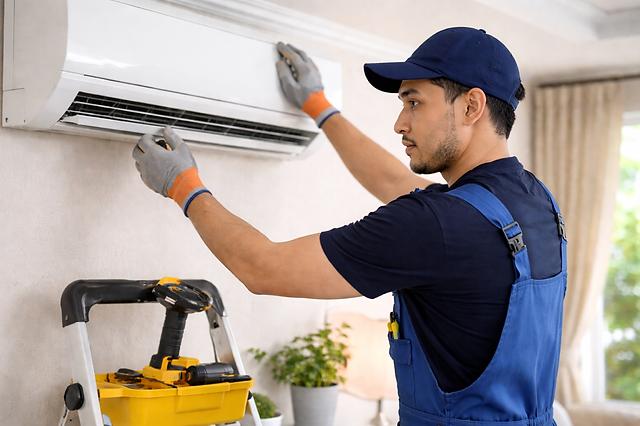
Heating a home in Turlock, CA
Turlock is the second-largest housing stock in this group and the most mixed. The four blocks below set out what the local numbers mean for the system in your house.
Turlock sits about 100 feet above sea level
Turlock sits at roughly 100 feet above sea level, on the valley floor with nothing between it and the air a furnace draws in. That means sea-level combustion, standard factory orifices and no high-altitude conversion in the appliance’s history. When a Turlock furnace burns lazily or the flame lifts, the altitude is not the explanation; the measured causes are gas pressure at the manifold, a dirty or obstructed burner, a flue that is partly blocked, an inducer that is slowing, or a heat exchanger that has failed. Starting from those measurements is also faster, because each one either passes or does not, and the finding comes from a gauge rather than a guess about the house, and the same visit can rule out the whole list.
Turlock’s housing spans five decades
The Census puts Turlock’s median year built at 1984, and the distribution is spread across decades: 19.4% of the housing from the 1970s, 18.9% from the 2000s and 18.7% from the 1980s. That is unusual among the towns around Modesto, which tend to have one dominant boom. It means Turlock service calls range from a 1970s furnace in a closet with metal ductwork to a 2000s heat pump on a sealed envelope. A single street can hold both. The practical consequence is that the year the house was built is the most useful question a Turlock homeowner can answer before a visit. It decides which parts go on the van and which test comes first, and it is the difference between a diagnosis and a guess.
How Turlock heats its homes
Utility gas is the primary heating fuel in 70.4% of occupied Turlock homes, according to the American Community Survey. Electricity accounts for 27.3%, bottled or tank gas for 1.1% and homes with no fuel used for 0.5%. Turlock has one of the higher electric shares in the group, and that share is doing real work in the housing stock. Three caveats apply. Each home’s primary fuel is counted once, so a gas furnace with a heat pump added later still reads as gas. The estimate lags about two years. And electricity is not a synonym for heat pump, because resistance heat is counted in the same line. In practice, one Turlock heating call in four starts with electric equipment.
Who serves a Turlock address
Turlock is in Stanislaus County and is an incorporated city, so a furnace or air-conditioner changeout inside the city limits is permitted through the City of Turlock rather than the county. On utilities, no single answer covers every address in town, and rebate eligibility depends on which utility serves the address. Before you count on a program for a heat pump or a furnace, check the provider on your bill and look up its current territory and rules, or call and ask. That check is more than paperwork in Turlock, because the electric share is high enough that the equipment being replaced may be on a different fuel from the one a rebate is written for, and the two fuels are not interchangeable at a workbench.
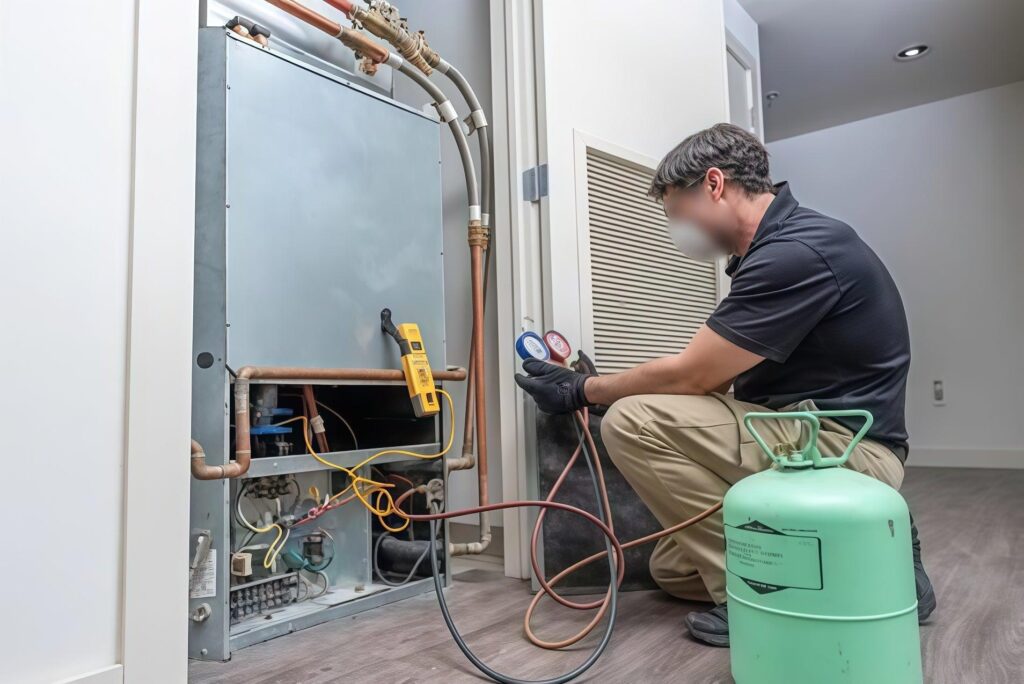
HVAC services in Turlock, CA
Turlock’s spread of housing decades means the service list has to cover both ends of the equipment range, and the visit has to start by working out which end the house is on.
For the older cohort, the calls are a furnace that lights and drops out, a blower that runs but moves little air, and ductwork that has been extended one room at a time. We handle furnace repair and furnace maintenance, and where the unit is at the end of its life, furnace installation begins with a load check and a duct inspection rather than a like-for-like swap.
For the newer cohort, the calls are a heat pump that cannot hold temperature on a cold morning, an air conditioner that trips a breaker, and a condenser that has lost charge. We handle heat pump repair, AC service and AC installation. Where an electric system is being replaced, heat pump installation is usually the better answer than replacing resistance heat with more resistance heat.
The middle of the range deserves its own note. Turlock houses from the late 1980s and early 1990s are frequently on their second furnace and their first replacement condenser, a pairing that creates mismatched capacity and airflow. A system like that can heat well and cool poorly, or the reverse, and the complaint often sounds like a single failed part when it is really a system that was assembled from two different eras. Checking the match between the indoor and outdoor equipment is part of the visit.
Across both, the maintenance work is the same and it is the cheapest part of the list: a seasonal AC maintenance visit before summer and a furnace check before the first cold night. Turlock also has a water-heater trade that arrives with the housing age, so water heater repair is part of the same visit when the tank is old. Where air quality is the complaint, indoor air quality work starts with filtration and returns.
If you are unsure which group your house belongs to, describe the symptom and the season it appears in. A heat pump that fails only on cold mornings, a furnace that short-cycles, and a room that is warm in summer and cold in winter are three different starting points, and each one changes what the technician tests first.
Heating or cooling problem in Turlock?
Why homeowners in Turlock choose us
AC Service Modesto works Turlock from our Modesto base, which makes it a normal route rather than a special trip. The local reason homeowners call is the mix: a Turlock street can hold a 1970s furnace and a 2000s heat pump within a few doors of each other, and the two need different parts, different tests and different conversations. We ask for the year the house was built and the equipment model before the visit, so the technician arrives prepared for the system that is actually there. You get the finding in plain language, the options ranked by what fixes the complaint, and no work started before you agree to it. If the honest answer is that the old unit has another season in it, the report will say so.
What a first visit covers
- The complaint reproduced before anything is adjusted
- Gas pressure and flame signal on a furnace call
- Refrigerant pressures and defrost on a heat pump call
- Static pressure, filter and return condition
- A written finding before work begins
What a Turlock changeout involves
- A load check rather than a like-for-like swap
- Whether the ductwork can carry the new airflow
- Line-set length and routing on a heat pump
- Electrical circuit and disconnect rating
- The City of Turlock permit path
Why this winter matters in Turlock
Turlock’s timing problem is that two cohorts are reaching a decision in the same season. The 1970s and 1980s housing is on furnaces that have already been repaired more than once, and the 2000s housing is on first-generation heat pumps and condensers that are now old enough to fail expensively. Neither failure is gradual. A heat exchanger cracks, a reversing valve sticks, an inducer seizes, and the house goes cold on the first genuinely cold night, usually with no warning the week before. Waiting one more season on equipment that already needs an annual repair is a bet against the coldest week of the year. Booking the assessment in autumn also leaves time for the parts of a changeout that cannot be rushed: the load check, the duct inspection, the electrical check and the city permit. In a town with this many housing decades, the parts also matter: a 1970s closet furnace and a 2000s heat pump do not share a supply chain, and ordering late is how a repair turns into a week without heat.
Frequently asked questions in Turlock
How old are most houses in Turlock?
Turlock’s median year built is 1984, with 19.4% of the housing from the 1970s, 18.9% from the 2000s and 18.7% from the 1980s. That spread is wider than most towns around Modesto, which is why Turlock service calls range from a 1970s closet furnace to a 2000s heat pump. The year the house was built is the most useful thing to know before a visit.
Do most Turlock homes heat with gas?
Utility gas is the primary fuel in 70.4% of occupied Turlock homes, against 27.3% electricity, 1.1% bottled gas and 0.5% with no fuel used. The electric share is one of the higher ones in the group and includes resistance heat as well as heat pumps. The Census counts one primary fuel per home and the estimate lags about two years, so it describes the housing stock rather than this season. What it does not tell you is whether the electric equipment in a particular house is a heat pump or resistance heat; only the equipment label does.
Does Turlock’s elevation affect a furnace?
No. Turlock sits at about 100 feet above sea level, so combustion air is at normal density and the furnace should be on its standard factory orifice set. There is no altitude conversion to chase. A Turlock furnace that burns poorly is far more likely to have a gas pressure problem, a dirty burner, a blocked flue or a failing inducer.
Which city permits a changeout in Turlock?
Turlock is an incorporated city in Stanislaus County, so a changeout inside the city limits is permitted through the City of Turlock, with addresses outside the limits falling to the county. Confirming the jurisdiction before work is scheduled matters because the permit sets the inspection sequence, and a heat pump changeout may also involve electrical work that is inspected. Confirming it early avoids the situation where the equipment is on site and the permit is not.
Why does my Turlock heat pump struggle on cold mornings?
Several causes look identical from the thermostat. A heat pump low on charge, a failing reversing valve, a defrost cycle that is not completing, or a duct system that cannot deliver enough air will all leave the house cold at the same time of day. The difference is only visible with gauges and a defrost check, which is why the diagnosis comes before the recommendation.
Is a 25-year-old furnace in Turlock worth repairing?
Only if the heat exchanger is sound and the fault is a single component. A furnace from Turlock’s 1970s or 1980s housing is at the age where the heat exchanger, the inducer and the control board can all be near the end at once, and repairing one while the others fail is how a homeowner ends up paying twice in two winters.
Serving Turlock and Stanislaus County
Next step for your Turlock home
Call (209) 439-1859 and describe the complaint.
Call (209) 439-1859 and describe the complaint..
Tell us the year the house was built.
Tell us the year the house was built..
We book a same-day or next-day visit where the schedule allows.
We book a same-day or next-day visit where the schedule allows..
The finding is explained before any repair starts.
The finding is explained before any repair starts..
You choose repair, replacement or a duct assessment.
You choose repair, replacement or a duct assessment..
Work is scheduled around the City of Turlock permit path.
Work is scheduled around the City of Turlock permit path..