
Heating and Cooling in Keyes, CA
Same-Day Visits
Morning calls get a same-day slot.
Keyes Route
Run from our Modesto base.
Plain Findings
The problem explained first.
Keyes packs three housing eras into a few blocks
Keyes is small enough to cross on foot in places, but the houses along those blocks were built in three different eras. A 1940s cottage, a 1970s ranch house and a 2010s build can sit within sight of each other, and each one asks a different question of a heating system. The town is also unincorporated, which changes who signs off on the work. Both facts shape the visit before anyone touches a furnace.
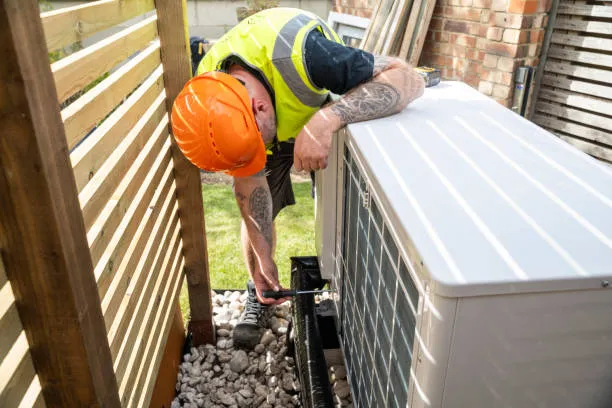
Heating a home in Keyes, CA
Keyes has one of the widest housing spreads in this group for its size, and a real share of homes that burn wood. The four blocks below set out what the local numbers mean for the system in your house.
Keyes sits about 98 feet above sea level
Keyes sits at roughly 98 feet above sea level, flat ground with no elevation to design around. At that height a gas appliance draws combustion air at close to sea-level density and should be running its standard factory orifices, with no high-altitude conversion anywhere in its history. So when a Keyes furnace burns unevenly, lifts off the burner or leaves a smell at startup, the cause is one of the measurable ones: manifold gas pressure, a dirty burner, a flue with an obstruction, a slowing inducer, or a heat exchanger that has failed. Each of those is a gauge reading or a visual check, which is why the diagnosis is short. A two-stage furnace adds a low-fire pressure reading on top of that list, and it is the one most often skipped.
Keyes has three housing eras side by side
The Census puts Keyes’ median year built at 1990, and the distribution is unusually wide for a place this small. Just over a quarter of the housing, 27.9%, dates from the 2010s, while 20.5% is from the 1970s, 15.6% from the 1990s and 12.8% from the 1940s. A 1940s cottage and a 2010s house can share a street. The older homes tend to have closets, metal ducts and small electrical services; the newer ones are tighter, with attic ductwork and modern panels. The era of the house is the first thing that decides what a service visit looks like. It also decides which parts are worth carrying, because a closet furnace from the 1940s and an attic air handler from the 2010s share almost nothing.
How Keyes heats its homes
Utility gas is the primary heating fuel in 71.1% of occupied Keyes homes, according to the American Community Survey. Electricity accounts for 20.6%, wood for 6.2%, bottled or tank gas for 1.4% and solar for 0.3%. The wood share is the highest in this group and it is not a rounding artefact: it reflects homes where a stove or a fireplace insert is the main heat. Three caveats apply. Each home’s primary fuel is counted once. The estimate lags about two years. And a wood-primary house usually still has a furnace or a wall unit for backup, which is the equipment that fails on a cold night. The split also tells you that electric equipment is present in about a fifth of homes, and that is where heat pump work tends to start.
Who serves a Keyes address
Keyes is a census-designated place in unincorporated Stanislaus County, not an incorporated city. That means a furnace or air-conditioner changeout is permitted through Stanislaus County rather than a city building department, and the same is true for the electrical work that often comes with a changeout. On utilities, no single answer covers every address, and rebate eligibility depends on which utility serves the house. Both facts are worth confirming before work is scheduled, because a county permit path and a city one do not run on the same inspection sequence. In practice the county path also covers the addresses just outside town that carry a Keyes mailing address, so the lot matters as much as the name. The whole CDP sits under the county, so there is no city limit to check against, only the parcel being worked on.

HVAC services in Keyes, CA
Keyes work starts by establishing which era the house belongs to, because a 1940s cottage and a 2010s build fail in different places.
In the older homes, the calls are a furnace that lights and drops out, a blower that moves little air and ductwork that has been patched over the years. We handle furnace repair and furnace maintenance, and where the unit is at the end of its life, furnace installation begins with a load check, a venting inspection and a look at whether the closet has enough combustion air for a modern appliance.
In the newer homes, the calls are a condenser that has lost charge, a blower that cannot push air down a long attic run, and a heat pump that struggles on the coldest mornings, or a furnace that short-cycles. We handle AC service, AC installation and heat pump repair, and the visit starts with airflow and return sizing before any equipment is condemned.
The wood-burning minority deserves its own note. A house that heats mainly with a stove still has a furnace, a wall unit or a heat pump for backup, and that backup is the equipment that has been sitting idle since last winter. An autumn check of the backup is cheap insurance in a house where the primary heat is a fire. We also handle water heater repair and indoor air quality work, both of which come up more often in older homes with tight rooms and few returns.
Maintenance is the part that gets skipped. A spring visit cleans the outdoor coil, checks the charge and clears the drain before the first hot week, and it is also when a failing contactor or a weak capacitor gets caught. An autumn visit checks the burners, the flue and the heat exchanger before the first cold one, and in a house with a wood stove it also confirms the backup system still lights. A system that sits idle for eight months is where a blower bearing, a capacitor or a pilot assembly gives out, and an autumn check catches it while it is still a small part. Both visits are inspections with a written finding rather than a parts swap, and in a town where the same houses change hands slowly, that record also tells you what the last technician already tried.
Heating or cooling problem in Keyes?
Why homeowners in Keyes choose us
AC Service Modesto works Keyes from our Modesto base, a short run down the highway rather than a special trip. The local reason homeowners call is the mix: a street can hold a 1940s cottage, a 1970s ranch and a 2010s build, and the three need different parts, different tests and different conversations. We ask for the year the house was built and what the house burns before the visit, so the right gauges and the right questions arrive with the technician. You get the finding in plain language, the options ranked by what actually fixes the complaint, and no work started before you agree to it. If the honest answer is that the old unit has another season in it, the report will say so.
What a first visit covers
- The complaint reproduced before anything is adjusted
- Gas pressure and flame signal on a furnace call
- Refrigerant pressures and airflow on a cooling call
- Whether the backup heat still works in a wood-heated house
- A written finding before work begins
What a Keyes changeout involves
- A load check rather than a like-for-like swap
- Combustion air and venting in an older closet
- Whether the ductwork can carry the new airflow
- Electrical service and disconnect rating
- The Stanislaus County permit path

Why this winter matters in Keyes
Keyes’ timing question comes from two directions at once. The 1970s and 1940s housing is on equipment that has been repaired more than once, and the 2010s housing is on first-generation condensers and heat pumps that are now old enough to fail expensively. Neither failure is gradual. A heat exchanger cracks, a capacitor opens, a reversing valve sticks, and the house goes cold on the first genuinely cold night, usually with no warning the week before. The wood-burning houses add a specific risk: the backup furnace has not run since March, and a blower that sat idle for eight months is exactly the part that seizes. Booking the assessment in autumn leaves time for the parts of a changeout that cannot be rushed: the load check, the duct inspection, the venting check and the county permit.
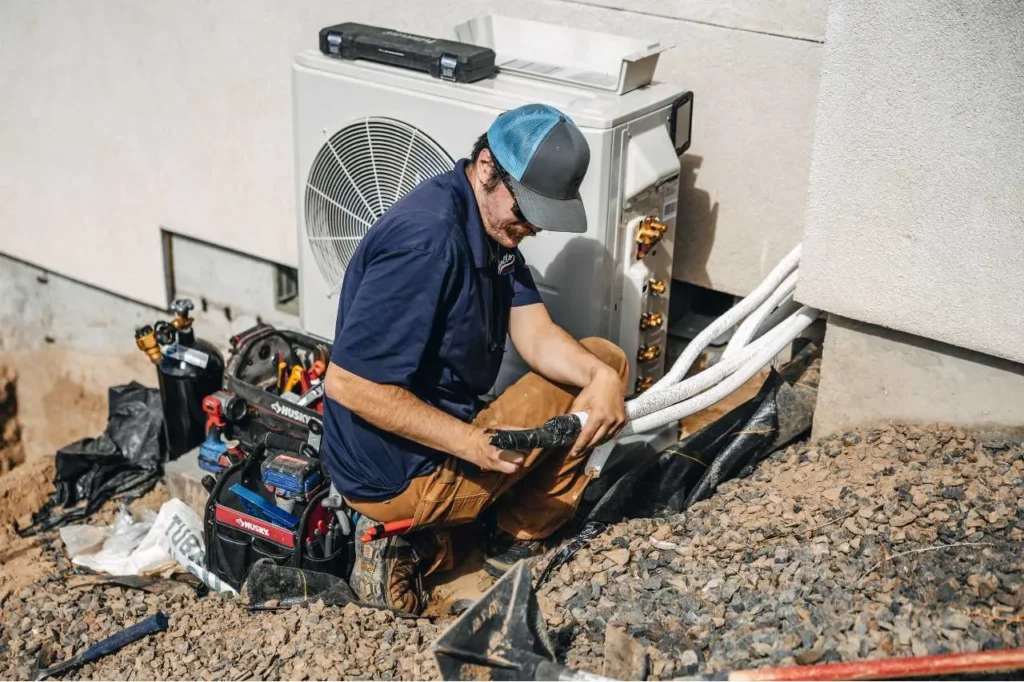
Frequently asked questions in Keyes
How old are most houses in Keyes?
The median year built is 1990, but the spread is wider than that suggests: 27.9% of the housing dates from the 2010s, 20.5% from the 1970s, 15.6% from the 1990s and 12.8% from the 1940s. A 1940s cottage and a 2010s house can sit on the same street. The year the house was built is the most useful thing to tell us before a visit, because it decides whether the first question is about the appliance or the ducts.
Do any Keyes homes heat with wood?
Yes. Wood is the primary heating fuel in 6.2% of occupied Keyes homes, the highest share in this group, against 71.1% utility gas, 20.6% electricity and 1.4% bottled gas. The Census counts one primary fuel per home, so a house that heats mainly with a stove is counted as wood even though it usually has a furnace or wall unit for backup. That backup is the equipment most likely to fail after sitting idle all summer.
Does Keyes’ elevation affect a furnace?
No. Keyes sits at about 98 feet above sea level, so combustion air is at normal density and the appliance should be on its standard factory orifice set. There is no altitude conversion to plan for. A furnace that burns poorly here is far more likely to have a gas pressure problem, a dirty burner, a blocked flue or a failing inducer.
Who permits a changeout in Keyes?
Keyes is a census-designated place in unincorporated Stanislaus County, so a changeout is permitted through the county rather than a city building department. That also applies to the electrical work that often comes with a changeout. Confirming the jurisdiction before work is scheduled matters because the permit sets the inspection sequence, and a fuel or venting change is part of what gets inspected.
Is an older furnace in Keyes worth repairing?
Only if the heat exchanger is sound and the fault is a single component. A furnace from the 1940s or 1970s housing is at the age where the exchanger, the inducer and the control board can all be near the end at once, and repairing one while the others fail is how a household pays twice in two winters. The exchanger is the part that decides it, because a cracked one is a safety matter rather than a comfort one.
Why is my Keyes furnace short-cycling?
Short cycling means the furnace is shutting down on its own limit rather than on the thermostat. The usual causes are a restricted filter or return, a flue that cannot vent properly, an oversized unit that heats the space faster than the blower can distribute the air, or a high-limit switch that is tripping. The fix depends on which one it is, and the way to tell is to measure temperature rise and static pressure rather than replace parts.
Serving Keyes and Stanislaus County
Next step for your Keyes home
Call (209) 439-1859 and describe the complaint.
Call (209) 439-1859 and describe the complaint..
Tell us the year the house was built and what it burns.
Tell us the year the house was built and what it burns..
We book a same-day or next-day visit where the schedule allows.
We book a same-day or next-day visit where the schedule allows..
Airflow, gas pressure and venting are checked.
Airflow, gas pressure and venting are checked..
You choose repair, replacement or a duct assessment.
You choose repair, replacement or a duct assessment..
Work is scheduled around the Stanislaus County permit path.
Work is scheduled around the Stanislaus County permit path..