
Heating and Cooling in Manteca, CA
Same-Day Visits
Morning calls get a same-day slot.
Manteca Route
Run from our Modesto base.
Plain Findings
The problem explained first.
Manteca holds six decades of housing at once
Manteca is the largest housing stock in this group, and the most evenly spread: six decades each account for more than a tenth of the homes. A 1950s house near the old centre, a 1980s tract on one side and a subdivision finished in the 2020s can all be inside the same city. That range is the local fact that matters most, because the heating system in a Manteca house is largely a record of the decade it was built in.
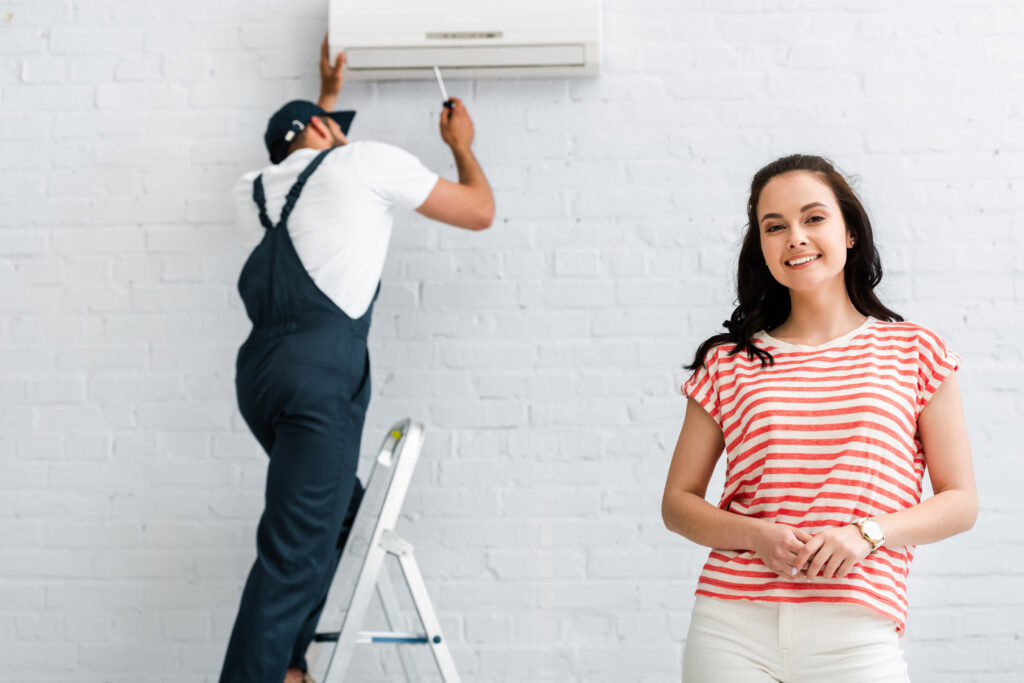
Heating a home in Manteca, CA
Manteca is the biggest and broadest housing stock in this group, with close to 27,000 occupied homes. The four blocks below set out what the local numbers mean for the system in your house.
Manteca sits about 36 feet above sea level
Manteca sits at roughly 36 feet above sea level, flat valley ground with no elevation to plan around. At that height a gas appliance draws combustion air at close to sea-level density and should be running its standard factory orifices, with no high-altitude conversion anywhere in its history. So when a Manteca furnace burns unevenly, lifts off the burner or leaves a smell at startup, the cause is one of the measurable ones: manifold gas pressure, a dirty burner, a flue with an obstruction, a slowing inducer, or a heat exchanger that has failed. Each is a gauge reading or a visual check, which is why a diagnosis here does not depend on the age of the house. A two-stage furnace adds a low-fire pressure reading to that list, and skipping it is how an intermittent fault survives a repair.
Manteca’s housing spans six decades
The Census puts Manteca’s median year built at 1995, but the average is doing a lot of work. Of the housing stock, 23.5% dates from the 2000s, 17.2% from the 2010s, 15.4% from the 1980s, 12.0% from the 1970s, 11.6% from the 1990s and 6.7% from the 1960s, with 5.8% from the 1950s and 4.3% predating 1950. No single decade dominates. That is unusual in this group, and it means a Manteca service call can involve a 1950s floor plan, a 1980s tract house or a nearly new subdivision, and the year the house was built is the first thing worth knowing. The equipment in each of those cohorts is at a different point in its life, so the parts carried and the tests run change with the address.
How Manteca heats its homes
Utility gas is the primary heating fuel in 70.7% of occupied Manteca homes, according to the American Community Survey. Electricity accounts for 22.6%, solar for 3.7%, bottled or tank gas for 1.1%, wood for 0.8%, other fuel for 0.2% and homes with no fuel used for 0.9%. Three caveats apply to the split. Each home’s primary fuel is counted once. The estimate lags about two years. And electricity is not a synonym for heat pump, because resistance heat is counted in the same line. The solar figure reflects homes where solar is the primary heating fuel, not every house with panels added later. With a stock this broad, the split is a map of the town rather than a description of any one street.
Who serves a Manteca address
Manteca is an incorporated city in San Joaquin County, so a furnace or air-conditioner changeout inside the city limits is permitted through the City of Manteca, with addresses outside the limits falling to the county. On utilities, no single answer covers every address, and rebate eligibility depends on which utility serves the house. Both checks are worth making before work is scheduled, because the permit sets the inspection sequence and a fuel or venting change is part of what gets inspected, while a rebate depends on the account rather than the address. In a city this size, the two can point in different directions, so it is worth keeping the permit question and the utility question separate. A changeout also has to match the venting, and in the older houses that flue may be shared or undersized.
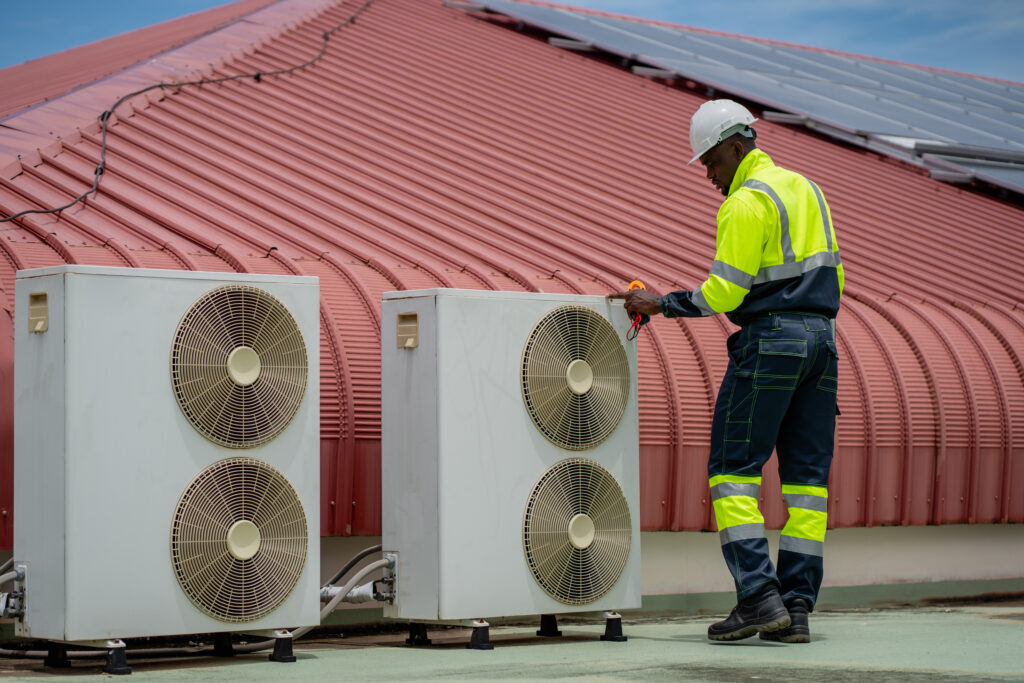
HVAC services in Manteca, CA
Manteca work is wide, because the town holds six decades of housing and each decade fails in its own way.
In the 1950s and 1960s houses the common calls are a furnace that lights and drops out, a blower that moves little air and ductwork that has been extended room by room. We handle furnace repair and furnace maintenance, and where the unit is past saving, furnace installation begins with a load check, a venting inspection and a look at whether the closet has enough combustion air for a modern appliance.
In the 1980s and 1990s tract houses the calls are a condenser that has lost charge, a coil that ices over and a system that heats well but cools one side of the house. We handle AC service and AC installation, and the visit starts with airflow and return sizing before any equipment is condemned, because a matched system on undersized ducts still leaves bedrooms warm.
In the newer subdivisions the calls are younger: a heat pump that cannot hold temperature, a defrost board that stops and a condenser that trips a breaker. We handle heat pump repair and heat pump installation, and where a first replacement is due, the load check matters as much as the equipment choice. A house built for a gas furnace does not automatically suit a heat pump without a look at the panel and the ducts.
Water heaters and air quality round out the list: water heater repair where a tank weeps at the base, and indoor air quality work where filtration and returns are the complaint. Neither is a separate trade in a house this size, and both are cheaper to handle on the same visit.
Maintenance is the part that gets skipped. A spring visit cleans the outdoor coil, checks the charge and clears the drain before the first hot week. An autumn visit checks the burners, the flue and the heat exchanger before the first cold one. Both are inspections with a written finding rather than a parts swap, and both cost less than the repair they are meant to prevent. In a city with this much variety, that written record is also what keeps the next visit short.
Heating or cooling problem in Manteca?
Why homeowners in Manteca choose us
AC Service Modesto works Manteca from our Modesto base, a run down the valley rather than a special trip. The local reason homeowners call is the range: Manteca holds six decades of housing, so the same street can have a 1950s furnace closet, a 1980s tract system and a heat pump from the last few years. A technician who arrives without knowing which one is there wastes the first half hour. We ask for the year the house was built, the equipment model and the fuel before the visit, so the right parts and the right gauges are on the van. You get the finding in plain language, the options ranked by what fixes the complaint, and no work started before you agree to it.
What a first visit covers
- The complaint reproduced before anything is adjusted
- Gas pressure and flame signal on a furnace call
- Charge, airflow and defrost on a heat pump call
- Static pressure, filter and return condition
- A written finding before work begins
What a Manteca changeout involves
- A load check rather than a like-for-like swap
- Whether the ductwork can carry the new airflow
- Combustion air and venting in an older closet
- Electrical service and disconnect rating
- The City of Manteca permit path
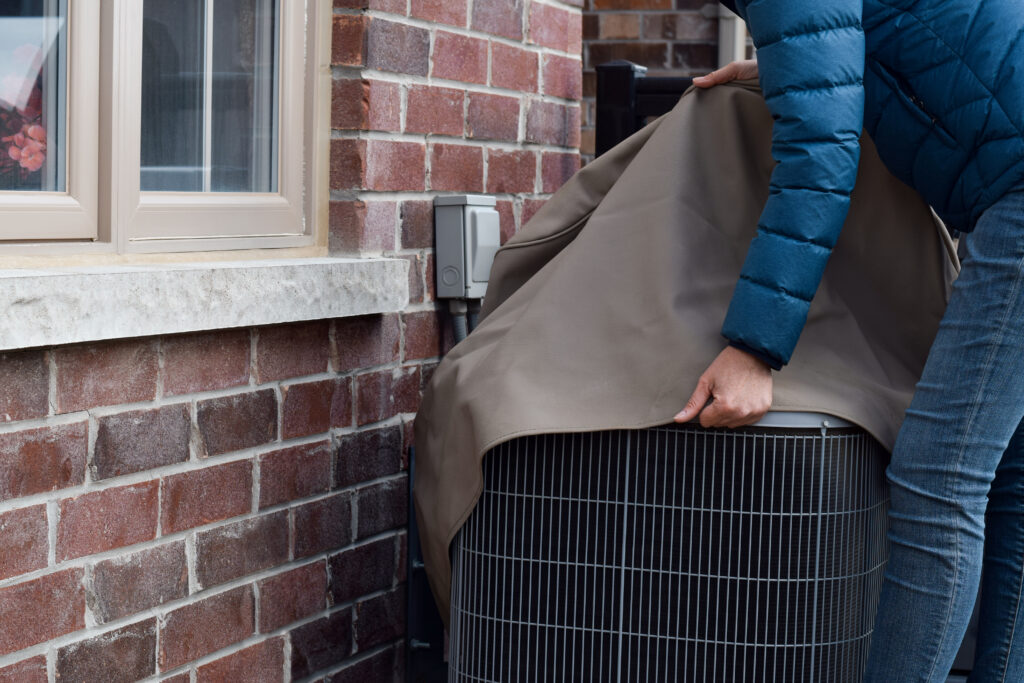
Why this winter matters in Manteca
Manteca’s timing question is different on each side of town. The 1980s and 1990s tract housing is on equipment that has already been repaired more than once, and the heat exchangers in those furnaces are reaching the age where a crack is a safety matter rather than an inconvenience. The subdivisions from the 2000s onward are reaching their first replacement, where the decision is about matching a new unit to the existing ducts rather than patching an old one. Neither failure is gradual. A cracked exchanger, a seized inducer or a failed capacitor all tend to appear on the first genuinely cold night, with no warning the week before. Booking the assessment in autumn leaves time for the load check, the duct inspection, the venting check and the city permit.
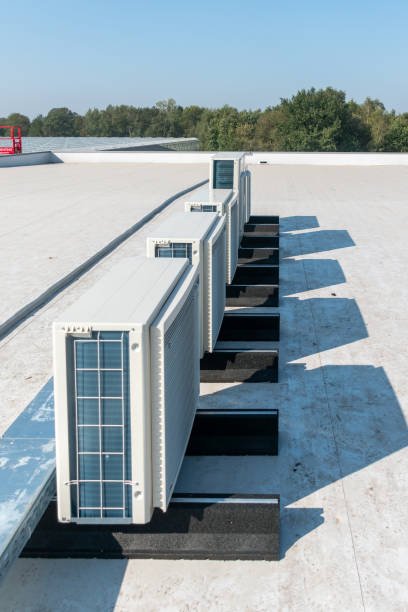
Frequently asked questions in Manteca
How old are most houses in Manteca?
The median year built is 1995, but Manteca’s stock is spread unusually wide: 23.5% from the 2000s, 17.2% from the 2010s, 15.4% from the 1980s, 12.0% from the 1970s, 11.6% from the 1990s and 6.7% from the 1960s, with 5.8% from the 1950s. No single decade dominates, which is why the year the house was built is the most useful thing to tell us before a visit.
Do most Manteca homes heat with gas?
Utility gas is the primary fuel in 70.7% of occupied Manteca homes, against 22.6% electricity, 3.7% solar, 1.1% bottled gas, 0.8% wood and 0.9% with no fuel used. The electric share is meaningful but smaller than in the newest towns in this group, which fits a housing stock with a long 20th century tail. The Census counts one primary fuel per home and lags about two years, so the figures describe the housing stock rather than this winter.
Does Manteca’s elevation affect a furnace?
No. Manteca sits at about 36 feet above sea level, so combustion air is at normal density and the appliance should be on its standard factory orifice set. There is no altitude conversion to plan for. A furnace that burns poorly here is far more likely to have a gas pressure problem, a dirty burner, a blocked flue or a failing inducer.
Which city permits a changeout in Manteca?
Manteca is an incorporated city in San Joaquin County, so a changeout inside the city limits is permitted through the City of Manteca, with addresses outside the limits falling to the county. Confirming the jurisdiction before work is scheduled matters because the permit sets the inspection sequence, and a fuel or venting change is part of what gets inspected.
Why is one side of my Manteca house always warmer?
An imbalance that follows the floor plan is usually a duct problem rather than an equipment problem. Long runs to the far bedrooms lose air at the joints, a return that serves only the hallway starves the rooms at the end, and a system charged to the closest room will always leave the last one short. Measuring static pressure and airflow tells you which of those it is, and adding capacity without fixing the ducts makes the imbalance worse.
Is a furnace from the 1980s worth repairing in Manteca?
Only if the heat exchanger is sound and the fault is a single component. A 1980s furnace is at the age where the exchanger, the inducer and the control board can all be near the end at once, and repairing one while the others fail is how a household pays twice in two winters. If the exchanger passes and the fault is cheap, a repair can still buy a season, but it should come with a plain statement of what else is close to failing.
Serving Manteca and San Joaquin County
Next step for your Manteca home
Call (209) 439-1859 and describe the complaint.
Call (209) 439-1859 and describe the complaint..
Tell us the year the house was built and what it burns.
Tell us the year the house was built and what it burns..
We book a same-day or next-day visit where the schedule allows.
We book a same-day or next-day visit where the schedule allows..
Airflow, gas pressure and the heat exchanger are checked.
Airflow, gas pressure and the heat exchanger are checked..
You choose repair, replacement or a duct assessment.
You choose repair, replacement or a duct assessment..
Work is scheduled around the City of Manteca permit path.
Work is scheduled around the City of Manteca permit path..