For most Modesto households, no heat in house overnight is uncomfortable rather than dangerous, and it can wait until morning. The exceptions are specific and worth knowing: a vulnerable person indoors, a genuine freeze outside, or any gas or carbon monoxide signal. This page helps you tell which situation you are in at 2am.
Is no heat actually an emergency?
Sometimes, and the honest answer is that it usually is not. Three things decide it: who is in the house, how cold it is outside tonight, and whether there is a safety signal rather than just a comfort problem.
| Situation | Call now | Waits until morning |
|---|---|---|
| Gas smell, or an odor like rotten eggs | Leave first, then call 911 and the gas utility from outside | Never |
| Carbon monoxide alarm has sounded | Leave first, then call 911 from outside | Never |
| Infant, older adult, or someone with a medical condition in the house | Yes | No |
| Outdoor temperature at or below freezing tonight | Yes, particularly if it will stay there for hours | No |
| Indoor temperature already falling below the mid 50s | Yes | No |
| Healthy adults, outdoor low in the high 30s, house still in the low 60s | Not necessary | Yes |
| System runs but heat is weak or intermittent | Not necessary | Yes |
Notice that the top two rows are not heating problems at all. They are evacuation situations that happen to involve heating equipment, and no diagnosis belongs in front of them.
If you are in the call now column, here is what to do
- Gas smell, or a carbon monoxide alarm sounding. Get everyone out of the building first. From outside, call 911, and for a gas smell call your gas utility’s emergency line as well. Do not go back inside, and do not stop to troubleshoot anything.
- A vulnerable person in a cold house, a freezing night, or an indoor temperature sliding into the 50s. This is a heating call rather than an evacuation. Move everyone into one room and add layers while you arrange the visit.
- Reach us for a no-heat call at (209) 439-1859, or through the furnace repair service page. Say that the house has no heat, say who is in it, and say what the system did before it stopped.
- If nobody can attend soon enough and a vulnerable person is getting cold, arrange somewhere warm for the night instead of waiting. A relative’s house is a better answer than an improvised heat source.
Everything below this point is written for the other column, the households who can reasonably wait for morning.
The rest of the table is a judgment about exposure rather than about the furnace. A house that has lost heat does not drop to the outdoor temperature. It loses heat gradually through the envelope, so a reasonably insulated Modesto home that was at 68 degrees in the evening is often still in the low 60s by morning when the outdoor low is in the high 30s. That is genuinely unpleasant and genuinely survivable.
Who is actually at risk on a cold night?
Not everyone equally. Ready.gov identifies the groups that a loss of heat puts “at greater risk” as “older adults, children, sick individuals and pets” (Ready.gov). If anyone in those categories is in the house, lower your threshold and treat a cold night as a call-now situation rather than a wait-and-see one.
The condition to understand is hypothermia, which the National Weather Service defines simply: “Hypothermia occurs when the body loses heat faster than it can produce it” (National Weather Service). It does not require dramatic cold. It requires a sustained imbalance, which is why age, illness, medication, immobility and being unable to add layers without help all matter more than the number on a thermometer.
Practical version. A healthy adult in a 60 degree house under blankets is fine. An eighty-year-old in the same house, or an infant who cannot regulate temperature or tell you they are cold, is a different situation with a different answer. So is anyone who cannot get up to add a blanket. If you are weighing it up at 2am and someone in the house falls into one of those groups, stop weighing it up and make the call.
How cold does a Modesto house actually get overnight?
Colder than people expect, but not as cold as the panic suggests. Measured across the 1991 to 2020 period, a typical overnight low here sits at 38.6 degrees in December and 38.8 in January (NOAA). A night at that temperature with no heat is a blanket problem, not a medical one, for a household of healthy adults.
The nights that change the answer are the freezing ones, and they are a real but limited part of the season here. December averages 5.6 nights at or below 32 degrees and January averages 4.7. The probability of at least one night at or below 28 degrees is 42.6% in December and 39.5% in January, and the median first freeze falls on 5 December.
Those freezing nights bring a second problem alongside the cold. With the heat off, unheated spaces track the outdoor temperature more closely, and plumbing running through a garage, a crawlspace or an exterior wall loses the background warmth that normally protects it. No heat in house plus a night at or below 28 degrees is the combination worth acting on, because a burst pipe costs far more than an after-hours service call. On those nights, open the cabinet doors under sinks on exterior walls and let a faucet drip.
Put together, roughly five nights a month in midwinter are the ones where a heating failure stops being an inconvenience and starts being a decision. Knowing tonight’s forecast low is the single most useful input into that decision, and it takes ten seconds to check.
What can you safely check at 2am?
A short list, and only a short list. Working on a furnace by phone light while tired is how small problems become expensive ones.
- The thermostat. Set to Heat, target well above the current room temperature, fan on Auto. Replace the batteries if the display is blank.
- The breaker. If it has tripped, reset it once. If it trips again, leave it off and stop.
- The service switch near the furnace. It looks like a light switch and it gets turned off by accident.
- The filter. If it is visibly clogged, replace it, because a restricted filter can shut the system down on a safety limit.
That is enough for the middle of the night. The complete ordered sequence, including what each result tells you, is in what to check when a furnace will not turn on. Where there is air moving but it is cold rather than nothing at all, the branch you want is the diagnostic order for a furnace blowing cold air.
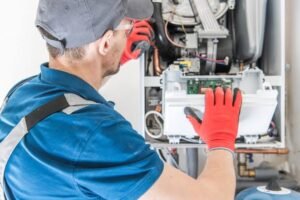
Do not open the burner compartment, do not touch the gas valve, and do not press any reset button you find inside the unit. Those are not 2am activities, and one of them, the rollout switch, exists precisely because flame escaped somewhere it should not have.
How do you stay warm safely until morning?
Concentrate people and heat rather than trying to warm the whole house.
- Pick one room, ideally a small interior one, and move everyone into it. Close the doors to unused rooms and close curtains and blinds, which add a surprising amount of resistance at a window.
- Layer clothing and bedding. Several thin layers hold heat better than one thick one, and a hat matters more than people expect while sleeping.
- Eat and drink something warm. Simple, and it works.
- Use a portable heater correctly if you have one. Plug it directly into a wall outlet rather than an extension cord, keep anything that can burn at least three feet away, and turn it off when you go to sleep rather than running it overnight.
What never to do, and this is the part that kills people. Ready.gov is explicit: “Only use generators and grills outdoors and away from windows and never heat your home with a gas stovetop or oven. Using an oven or stovetop can also increase the risk of fires, burns and could damage the appliance.” A gas oven with the door open is not a heater. It produces combustion products in a room with no venting, and it is a recurring cause of carbon monoxide poisoning during heating failures. The same applies to a barbecue, a camp stove, a patio heater and a generator, including in an attached garage with the door open.
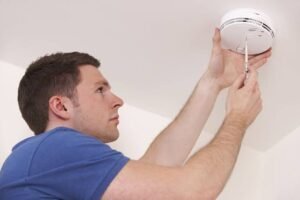
If a carbon monoxide alarm sounds at any point during the night, leave the building and call 911 from outside before anything else on this page applies. What to do next, and why a single activation matters even when responders find nothing, is set out in the guide to carbon monoxide warning signs.
When is it worth calling at 2am rather than waiting for 8am?
When the triage table above puts you in the call-now column, the answer is simple and the cost is not the deciding factor. Otherwise it is worth knowing what you are choosing between.
An after-hours call generally costs more than the same visit in business hours, and the overnight visit is frequently a diagnosis plus a temporary measure, with the actual repair happening the next day anyway once parts are available. If the house is holding a reasonable temperature, everyone in it is healthy, and tonight’s low is in the high 30s, waiting until morning usually buys you a cheaper visit and the same outcome.
What that calculation should never override: a gas smell, a carbon monoxide alarm, a vulnerable person in a cold house, or a hard freeze with the heat off and plumbing exposed. Those are worth any after-hours premium.
When you do call, whether tonight or in the morning, say what the system did rather than only that it stopped. Whether the blower ran, whether you heard the burner try to light, whether it worked briefly then quit, and whether a breaker tripped are all diagnostic information. We cover no-heat calls across the Modesto area on the number above, and the wider picture of what fails in a local winter and why is in the guide to winter home comfort, safety and energy costs.
Frequently asked questions
Is no heat in the house an emergency?
It depends on who is inside and how cold it is outside. With healthy adults and an outdoor low in the high 30s, which is typical for Modesto, it is uncomfortable and can wait until morning. It is an emergency if there is an infant, an older adult or someone with a medical condition in the house, if the temperature is at or below freezing, or if there is any gas smell or carbon monoxide alarm.
How cold does it get overnight in Modesto in winter?
Averaged over 1991 to 2020, NOAA records a typical low of 38.6 degrees in December and 38.8 in January. December averages 5.6 nights at or below freezing and January 4.7. So most winter nights are in the high 30s, and only a handful each month reach the point where a heating failure becomes genuinely risky.
How long does a house stay warm without heat?
Longer than most people assume, because a house loses heat gradually through its envelope rather than tracking the outdoor temperature. A reasonably insulated home that was at 68 degrees in the evening is often still in the low 60s by morning when the outdoor low is in the high 30s. Poor insulation, single glazing and a windy night all shorten that.
Can I use the oven to heat the house if the furnace fails?
No. Ready.gov states directly that you should never heat your home with a gas stovetop or oven, and notes it also raises the risk of fires and burns. An oven vents combustion products into the room. The same applies to barbecues, camp stoves, patio heaters and generators, including in an attached garage.
What should I check myself before calling at night?
Four things only: the thermostat setting and batteries, the breaker, the service switch near the furnace, and the air filter. Reset a tripped breaker once, and if it trips again leave it off. Do not open the burner compartment, touch the gas valve or press reset buttons inside the unit.
Is emergency heating repair more expensive at night?
After-hours visits generally cost more than the same work during business hours, and an overnight call is often a diagnosis plus a temporary fix, with the real repair happening the next day once parts are available. That trade-off is worth weighing when the situation is a comfort problem, and worth ignoring entirely when it is a safety one.
The short version
Check tonight’s forecast low and look at who is in the house. Healthy adults with an outdoor low in the high 30s can wait for morning in extra layers. An infant, an older adult, someone unwell, an indoor temperature sliding into the 50s, or a night at or below freezing all mean call now. A gas smell or a carbon monoxide alarm means leave the building first and call 911 from outside, before anything on this page applies.